RAG Pipeline

A collection of 14 posts
RAG for B2B SaaS: How to Use Retrieval-Augmented Generation to Personalize the Entire Customer Journey
Artificial Intelligence

RAG for B2B SaaS: How to Use Retrieval-Augmented Generation to Personalize the Entire Customer Journey

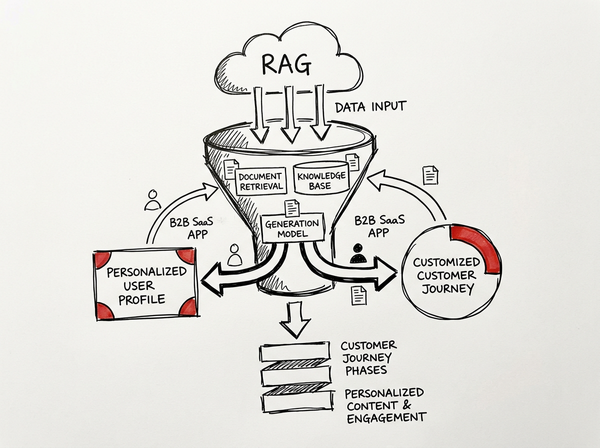
Retrieval-Augmented Generation (RAG) transforms passive chatbots into proactive revenue engines across the B2B SaaS lifecycle. By unifying customer data platforms with generative AI, agentic RAG systems autonomously execute complex tasks like updating CRM stages and triggering retention offers. The architecture directly increases net revenue retention and eliminates support bottlenecks. Why
4 min read
Scaling Extreme Token Efficiency: Porting the Zoe Method to CrewAI
Artificial Intelligence

Scaling Extreme Token Efficiency: Porting the Zoe Method to CrewAI

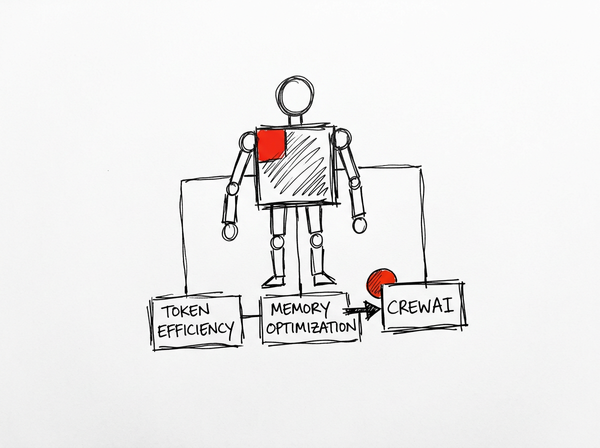
The lightweight token-saving approach demonstrated by Zoe relies on strict context compression, structured outputs, and the elimination of conversational filler from LLM prompts. Porting this extreme token efficiency to a scalable orchestration system like CrewAI transforms expensive, bloated multi-agent loops into highly profitable, production-ready workflows. By systematically restricting what data
7 min read
What Is RAG for E-commerce? The Complete Guide to Retrieval-Augmented Generation in Retail (2026)
E-commerce

What Is RAG for E-commerce? The Complete Guide to Retrieval-Augmented Generation in Retail (2026)

RAG (Retrieval-Augmented Generation) for e-commerce is an AI architecture that connects a large language model to your live business data — product catalog, inventory, reviews, customer history — so it generates answers grounded in real-time facts rather than static training data. Retailers use it to power intelligent product search, hyper-personalized recommendations, AI

10 min read